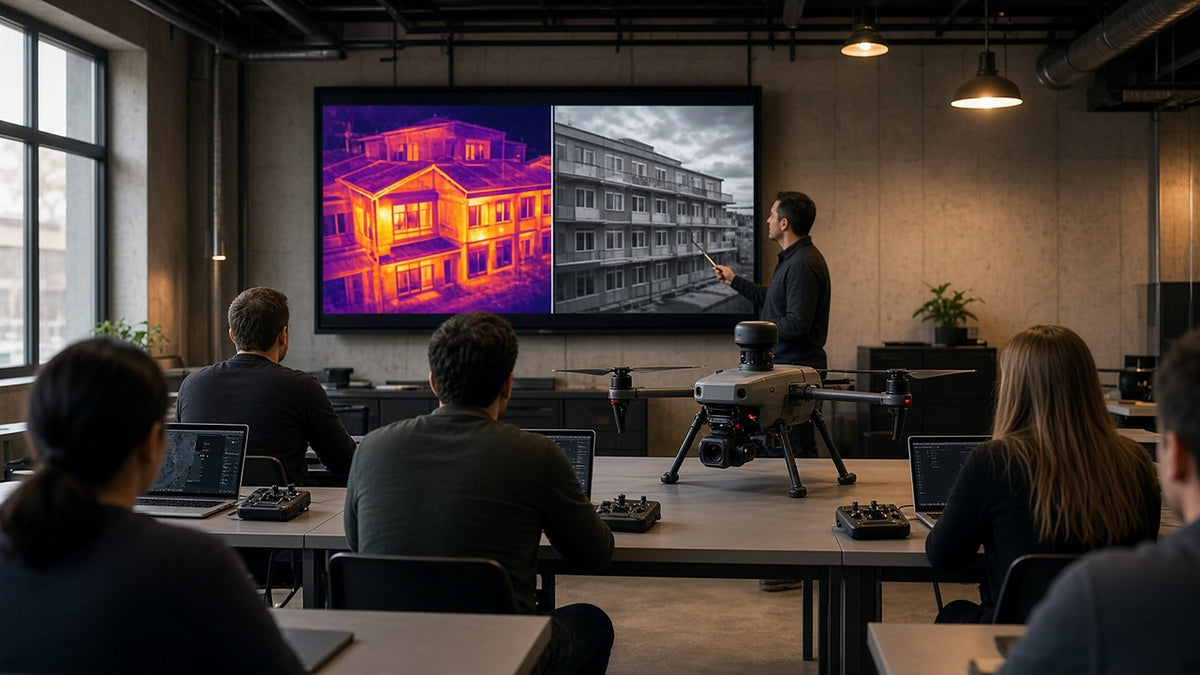
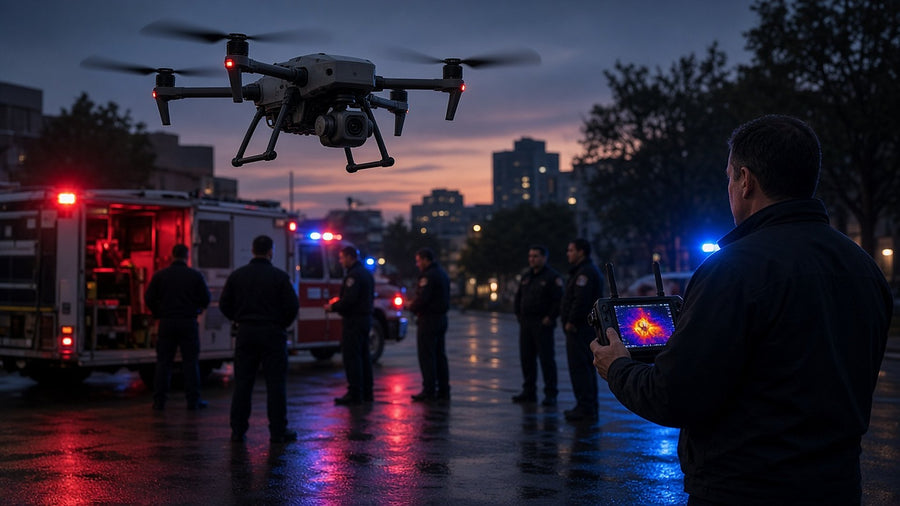
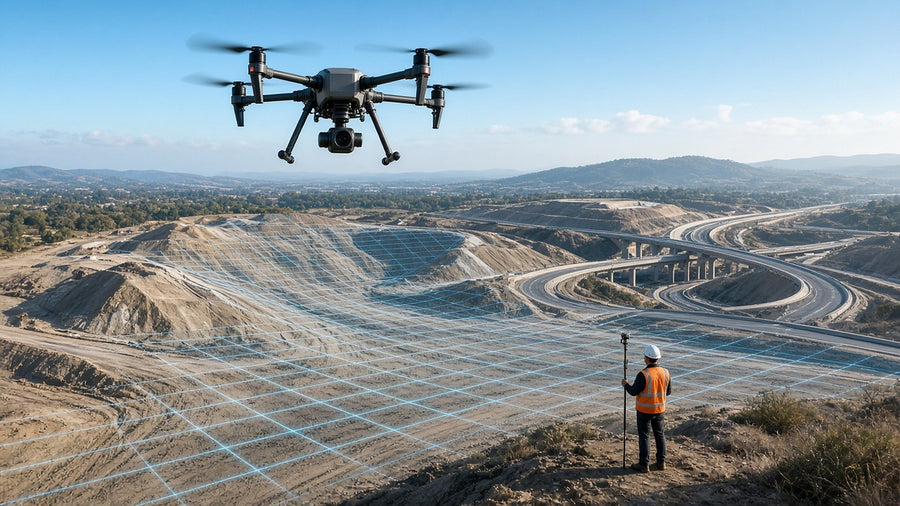
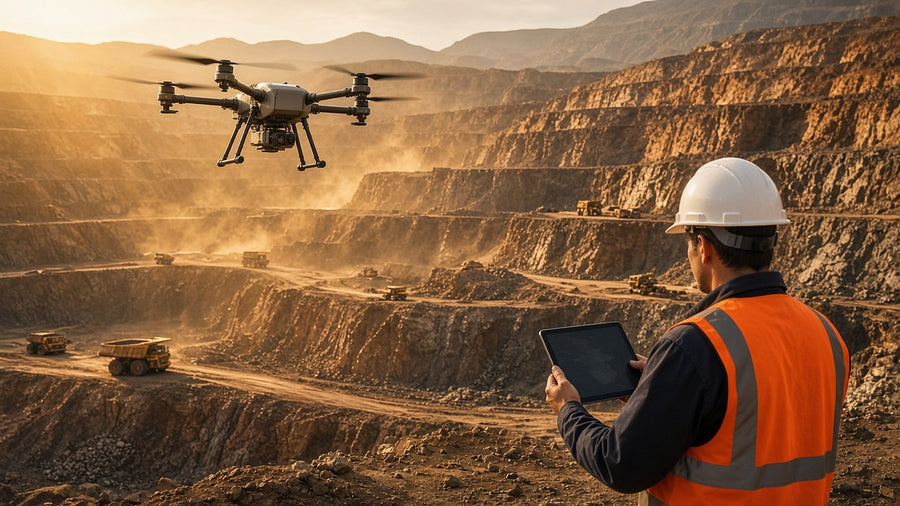
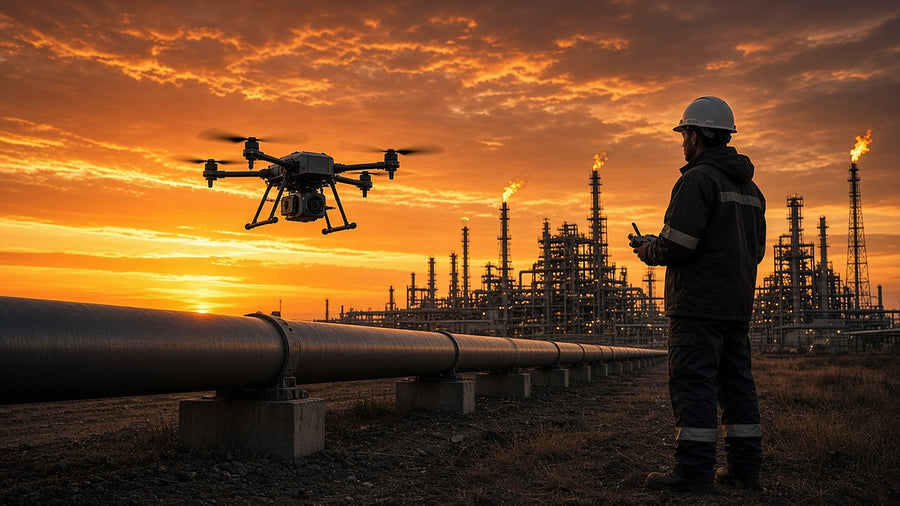
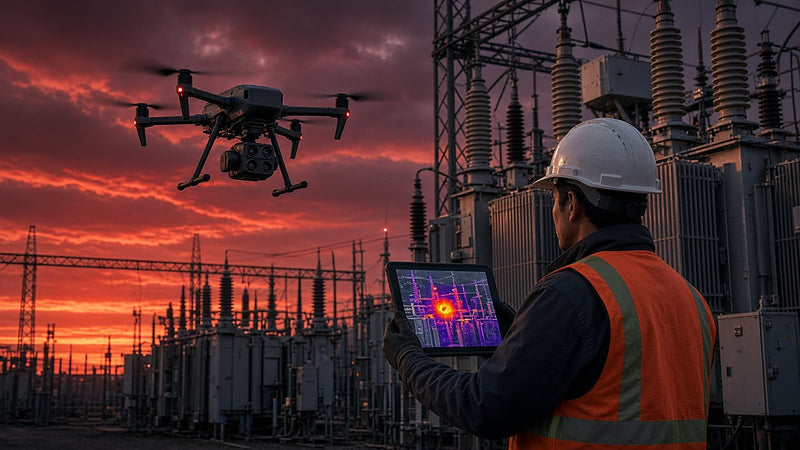
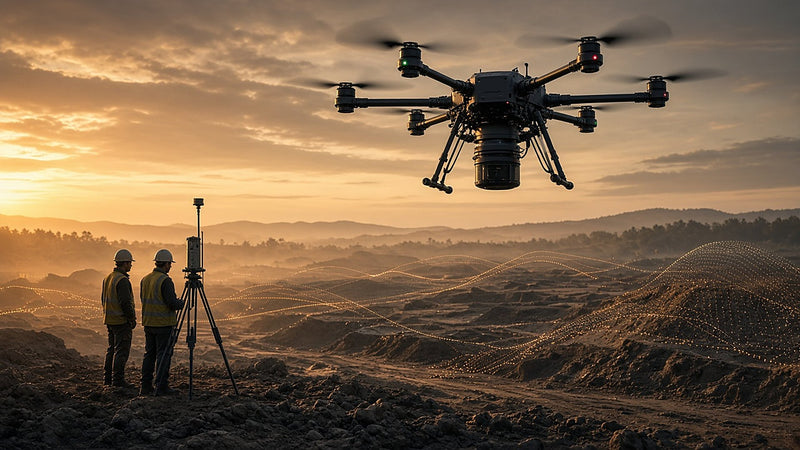
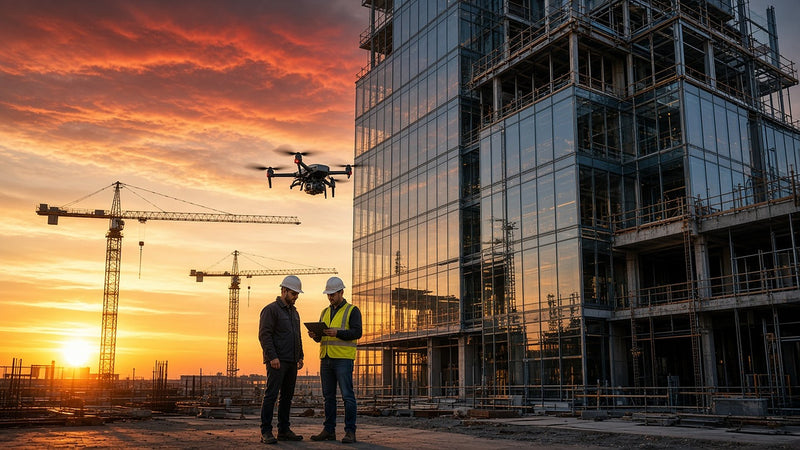
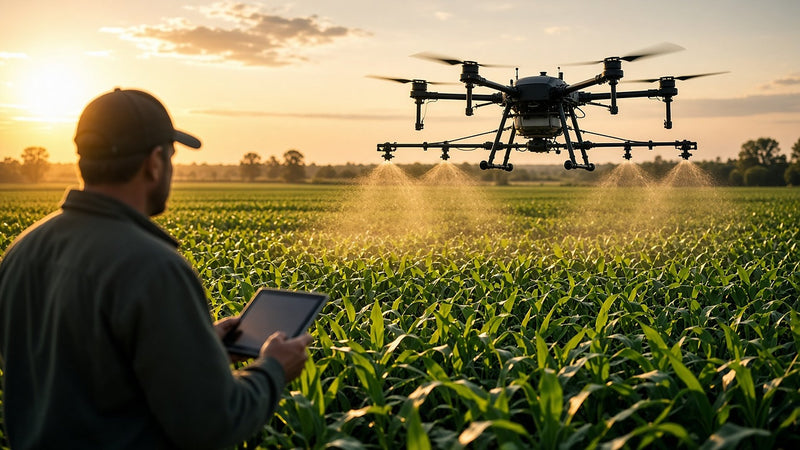
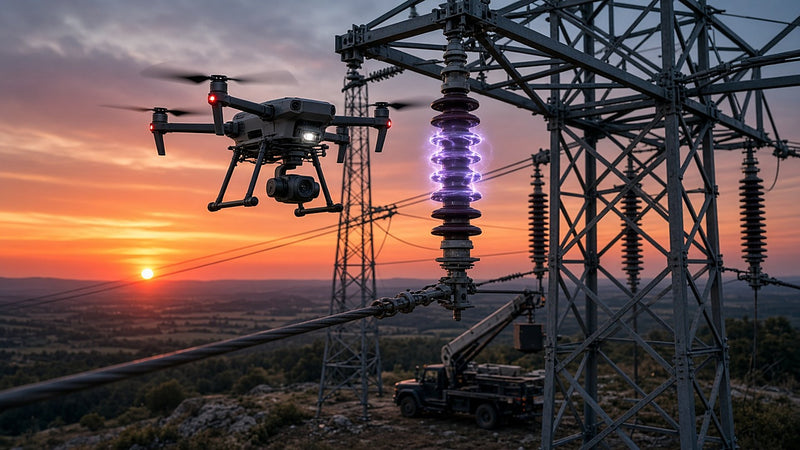
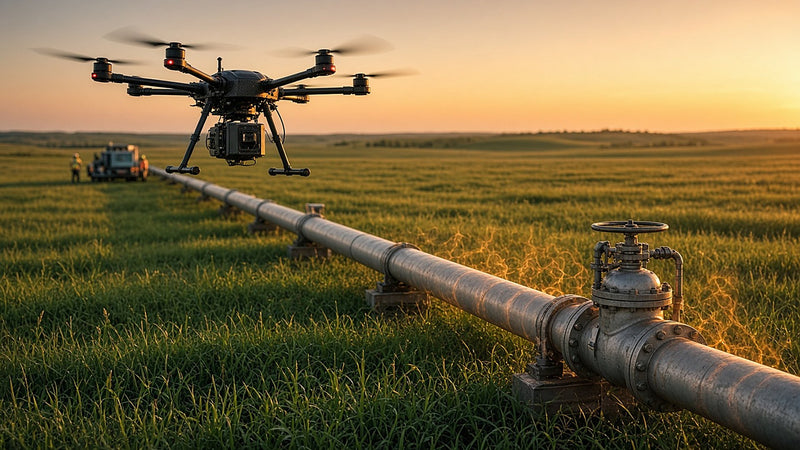
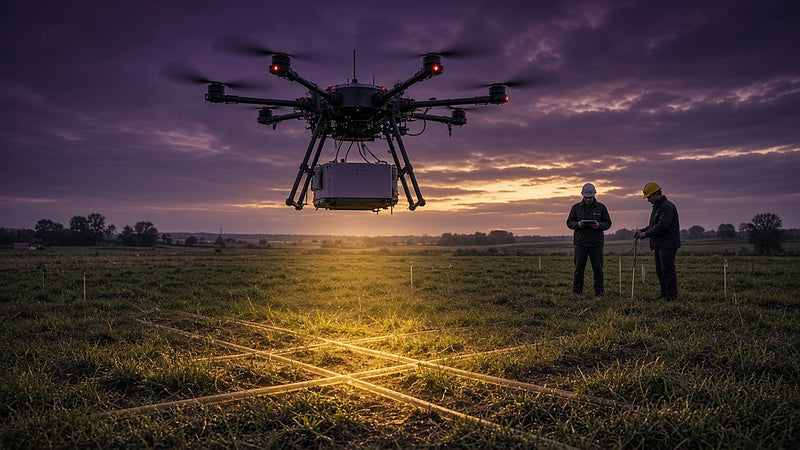
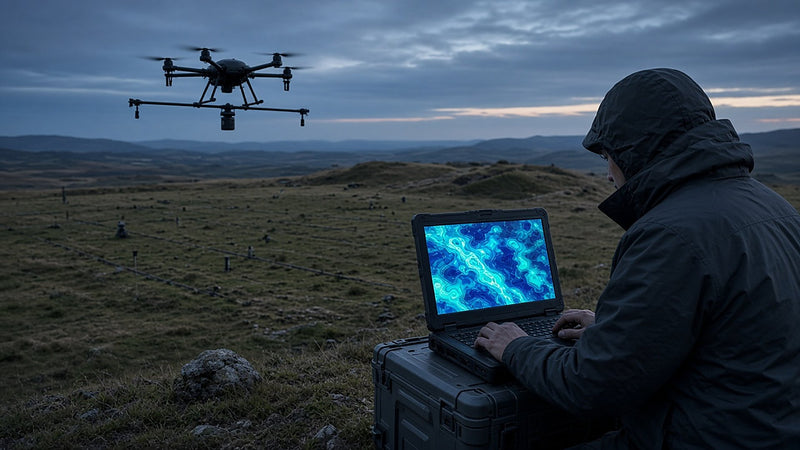
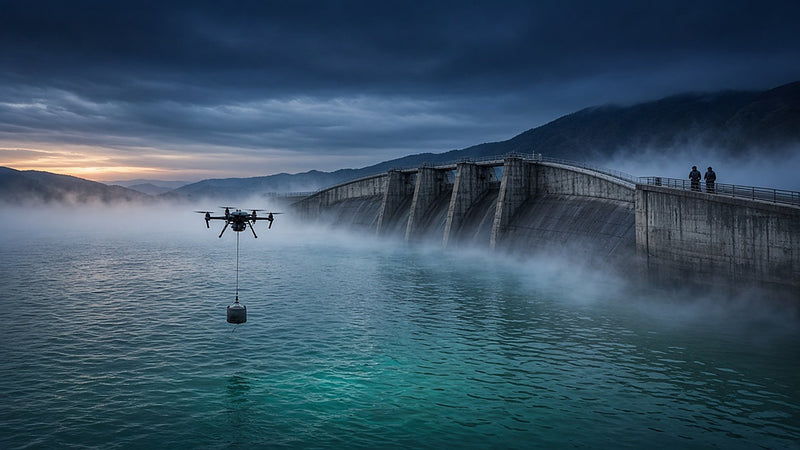
Illustration: instructor and trainees with an enterprise drone at a field training site

Training

Train the crew before the mission.

Hands-on UAS training for enterprise clients, government agencies, public safety departments and individuals: FAA Part 107 prep, platform onboarding, and sensor and software courses. Maverick training is held on-site at your location or in Savage, MN.

On-site or in Savage, MNAt your location with your aircraft, or at our Savage, MN site with a classroom, showroom, local flight field and lake.
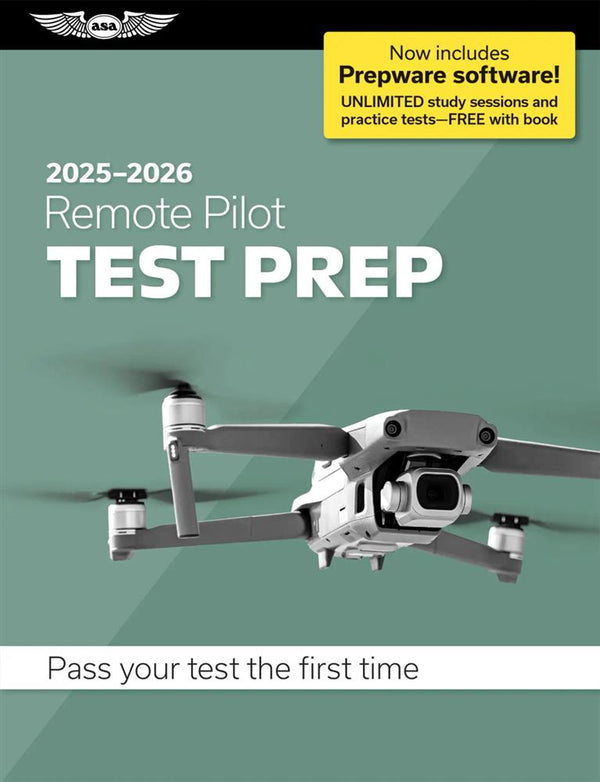
Part 107 prepInstruction on attaining a commercial remote pilot certificate, plus the ASA test prep guide.
Platform & sensor coursesFlytBase, Inspired Flight, Nolvis, Starling, SPH Engineering UgCS, GPR and methane, and Pix4D.
Program buildingCustom pilot training, SOP development, pilot assessments, program software and consulting.

Why training matters

The aircraft is only as good as the crew flying it.

A drone or robot program is people, procedures and data, not just hardware. Training gives your operators a shared way to plan, fly, capture and report, so every mission is legal and repeatable, and the data holds up when someone relies on it.

Maverick helps organizations put drone programs in place safely and effectively, from a first remote pilot certificate to mission-specific training on search and rescue, thermal imaging, aerial mapping, inspections and aerial videography.

  • Customized pilot training on the platforms and payloads you actually fly
  • Standard operating procedures (SOP) development and pilot assessments
  • Program management software, consulting and new drone pilot support
  • Manufacturer courses for docks, mission software, GPR, methane detection and mapping
Illustration: classroom drone training with a thermal and visual camera feed on screen

Courses & study materials

Courses, programs & study materials

16 listings

Maverick

Unmanned Systems Training Programs

Maverick's own instructor-led programs, from first-time familiarization to multi-day enterprise and industrial training, tailored to your operation.

Capacitación

Capacitación

From $ 500.00

6 programs, from a 1-hr remote session to 5-day industrial training

View details →

Unmanned Systems Training Programs

  • 1-Hr Remote UAS FamiliarizationFrom $550Platform basics, safe operating procedures and remote controller familiarization
  • Enterprise TrainingFrom $1,500/day · $5,000/5 daysMission planning, payload integration and best practices for complex platforms
  • Industrial TrainingFrom $2,500/day · $12,000/5 daysInspection, infrastructure and survey workflows, data capture and field safety
  • Agriculture: Virtual Overview + RCFrom $500DJI Agras platform overview and remote controller operation
  • Vesper 3-Day Basic Operator's CourseFrom $9,998Foundational UAS operations, regulations and mission execution
  • Vesper 1-Day Remote FamiliarizationFrom $2,100Single-day familiarization for operators moving to new platforms or missions

Prices as listed on the Unmanned Systems Training Programs product. Ask about custom programs for your team.

Sensors & software

Sensor, survey & mapping software courses

SPH Engineering courses for UgCS mission planning, terrain following, ground-penetrating radar and methane detection, plus official Pix4D online courses and certification exams.

SPH Engineering course path

  1. UgCS BasicsMission planning, DJI connection, photogrammetry
  2. AreaScan & TTFTerrain-aware missions with SkyHub + altimeter
  3. GPR-1GPR on a drone: setup, planning, acquisition
  4. GPR-2Processing & radargram interpretation
  5. GPR-3Advanced survey design & deliverables
  6. Methane Leak DetectionLaser Falcon surveys (after steps 1–2)

Prerequisites as stated by SPH Engineering: GPR-1 and Methane Leak Detection build on UgCS Basics and AreaScan & TTF; GPR-2 follows GPR-1; GPR-3 requires GPR-1 and GPR-2. SPH courses are delivered at the SPH Engineering office or by video conference, priced per group of up to 4 students.

Prices shown are the listed prices on each course. Formats, durations and group sizes are as stated on each course page. Call or request a quote to schedule a date or build a custom program.

Why it matters by industry

Every industry flies a different mission.

The aircraft may be the same, but the risks, rules and deliverables change by industry. Here is why training matters in each, and the courses in the store that cover that work.

Why it matters by product line

Air, Land and Sea each need their own skills.

Maverick carries drones and aircraft, ground robots and underwater ROVs. Each one operates in a different environment, with different hazards and controls.

Land

Robots, quadrupeds & humanoids

Ground robots share floors, stairs and plant spaces with people. Operators need safe operating zones, terrain and stair limits, battery management and confident teleoperation in tight spaces. No dedicated robot course is listed yet, so ask us about a custom program for your platform.

Shop Land →
Sea

Underwater ROVs

Underwater, the vehicle is out of sight. Tether management, currents, low visibility, pre-dive checks and recovery plans matter, as does reading camera and sonar feeds correctly. No dedicated ROV course is listed yet, so ask us about a custom program.

Shop Sea →

Why it matters by sensor & payload

Sensors don't interpret themselves.

A payload is only as useful as the data it brings back. Trained operators set the sensor up correctly, fly it at the right height, speed and standoff, and know how to read what it shows, including when a reading is misleading.

LiDAR

LiDAR

LiDAR accuracy depends on calibration routines, altitude and speed, overlap, GNSS/RTK quality and checkpoints on the ground.

A trained operator plans for the point density the project needs, runs the calibration steps, and checks results against ground truth before calling a survey done.

See the Zenmuse L2 →
Multispectral

Multispectral

Vegetation indices are only comparable when capture conditions are consistent: light, time of day, altitude and radiometric calibration.

A trained operator uses the sun sensor and calibration steps, flies at consistent times and heights, and compares fields across dates without mistaking lighting changes for crop changes.

See the Mavic 3 Multispectral →

Integrated Systems View all Integrated Systems →

Integrated System

Corona

UV corona cameras reveal electrical discharge on energized equipment that the eye can't see.

A trained operator keeps a safe standoff from live lines and equipment, and reads corona activity in light of conditions such as humidity.

Corona systems →
Integrated System

Methane Detection

Laser methane detectors report along the beam path (ppm×m), not a point concentration, and wind and terrain affect results.

A trained operator plans linear and area surveys, accounts for weather, and processes data for leak identification and reporting.

Methane detection →
Integrated System

GPR

Ground-penetrating radar needs the right frequency for the target depth and a steady height above the surface.

A trained operator uses terrain following for uniform data, and applies velocity analysis to turn travel time into depth.

GPR systems →
Integrated System

Magnetometer

Magnetometer surveys rely on low, steady flight lines and awareness of magnetic noise from the aircraft and surroundings.

A trained operator plans line spacing and terrain-following flight for the target, and keeps sources of interference in mind when reviewing data.

Magnetometers →
Integrated System

Echo Sounder

Drone-mounted echo sounders measure water depth while flying low over water, where altitude control and recovery planning matter.

A trained operator holds a consistent height over water, plans for safe recovery, and checks sounder settings before trusting depth readings.

Echo sounders →

Trained vs. untrained

What a trained operator gets right.

01

Data that holds up

Plans altitude, speed, overlap and ground control for the deliverable, then checks coverage before leaving the site.

Without training: Gaps, blur or poor overlap that only show up in processing, which means a return trip.

02

Safe standoff

Keeps safe distance from structures, energized equipment, people and terrain, and allows for wind and compass or GPS interference.

Without training: Flying too close to assets or people, or getting caught out by interference near steel and power.

03

Reading the sensor

Understands what a thermal, methane, GPR or corona reading actually means, and when it can mislead.

Without training: Mistaking reflections, weather or noise for findings, or missing real ones.

04

Emergencies & fail-safes

Knows the aircraft's fail-safe behavior and practices lost link, low battery and emergency landing procedures.

Without training: Hesitation when something goes wrong, and a small problem becomes a lost aircraft.

05

Legal, documented flights

Checks airspace, gets authorizations where needed, keeps registration and Remote ID current, and logs every flight.

Without training: Flights that put the pilot, the program and the organization at risk.

06

A repeatable program

Works from SOPs, checklists and pilot assessments, so results are consistent across pilots and over time.

Without training: Every pilot does it differently, and results can't be compared or trusted.

Compliance

FAA Part 107: the basics.

In the United States, most commercial (non-recreational) small drone flights are flown under the FAA's Part 107 rules, and the person flying needs an FAA Remote Pilot Certificate. Here is the general path, as described by the FAA.

  1. Check eligibilityBe at least 16 years old, able to read, speak, write and understand English, and in a physical and mental condition to fly a drone safely.
  2. Pass the knowledge testTake the initial knowledge test, Unmanned Aircraft General – Small (UAG), at an FAA-approved knowledge testing center.
  3. Apply for your certificateComplete FAA Form 8710-13 in IACRA. A TSA security background check is part of the process.
  4. Register and meet Remote IDDrones flown under Part 107 must be registered with the FAA and meet Remote ID requirements.
  5. Stay currentComplete the FAA's free online recurrent training every 24 calendar months.

Where training happens

On-site at your location, or in Savage, MN.

On-site at your location

Maverick brings the training to your team, so you learn on your own aircraft, payloads and operating environment.

In Savage, MN

Our Savage, MN site has a classroom, a showroom, a local flight field, a lake for water operations, and other facilities for inspection training. 7385 Highway 13 W, Savage, MN 55378.

Partner courses

  • SPH Engineering: at the SPH Engineering office or by video conference
  • Pix4D: self-paced online
  • FlytBase: 3-day on-site at your facility, or remote live sessions
  • Starling: on-site or at a Starling location
  • Inspired Flight: on-site or at an agreed location

FAQ

Training FAQ

Still have questions? See the full FAQ or call (612) 808-9838, Mon–Fri 9 AM–4 PM CT.

Where is training held?

Maverick training is held on-site at your location or at our Savage, MN site, which has a classroom, a showroom, a local flight field, a lake for water operations, and other facilities for inspection training. Partner courses vary: SPH Engineering courses run at the SPH Engineering office or by video conference, Pix4D courses are self-paced online, and FlytBase offers on-site and remote programs.

Do I need an FAA Part 107 certificate?

If you fly a small drone for work or business in the U.S., you generally need an FAA Remote Pilot Certificate under Part 107. Recreational flying has different rules. See faa.gov/uas for the FAA's current requirements.

Can you help us prepare for the Part 107 knowledge test?

Yes. Our programs include instruction on attaining a commercial remote pilot certificate, and we carry the ASA FAA Part 107 Test Prep study guide with Prepware.

Can training be customized to our aircraft and mission?

Yes. Maverick offers customized pilot training, SOP development, pilot assessments, program management software, consulting and new drone pilot support. Several partner courses, such as Starling and Inspired Flight, are also tailored to your platform and mission.

How many people can attend?

It depends on the course. Starling Training is for up to 8 attendees, SPH Engineering courses are priced per group of up to 4 students, and FlytBase programs include pilot certification for up to 5 pilots. For Maverick programs, tell us your team size when you request a quote.

Which SPH Engineering course should we start with?

Start with UgCS Basics, then AreaScan & True Terrain Following. GPR-1 and Methane Leak Detection build on those two; GPR-2 follows GPR-1, and GPR-3 requires GPR-1 and GPR-2.

How do I book training?

Request a quote or call (612) 808-9838, Monday to Friday, 9 AM to 4 PM CT. Tell us your platform, payloads, team size and preferred location.

Build a training plan for your team.

Tell us your platform, payloads and mission, and we'll recommend the right courses and put together a quote. Call (612) 808-9838, Mon–Fri 9 AM–4 PM CT.

About Maverick training

Capacitación para clientes empresariales, agencias gubernamentales, departamentos de seguridad pública e individuos.

Nuestros programas de capacitación integrales incluyen capacitación práctica en persona, instrucción para obtener una licencia de piloto remoto comercial y capacitación avanzada específica para la misión en búsqueda y rescate, imágenes térmicas, mapeo aéreo, inspecciones, videografía aérea y más.

Ayudamos a las organizaciones a implementar de forma segura y eficaz un programa de drones a través de capacitación de pilotos personalizada, desarrollo de procedimientos operativos estándar, evaluaciones de pilotos, software de gestión de programas, consultoría y apoyo a nuevos pilotos de drones.

Scenes shown are illustrations.